Short answer: a wearable breast pump can be useful at work, but it should not be chosen only because it looks discreet. Before buying one, check whether you need it as a primary pump or a backup, whether the flange size fits, how much cleaning the parts require, whether your workplace gives you enough pumping time and private space, and whether you have a plan if the wearable gives lower output than a standard double electric pump.
Many parents search for wearable breast pump reviews because they want something practical: fewer wires, less setup, and more flexibility during workdays. Reddit parenting discussions show a consistent pattern. Some parents love wearables for mobility. Others find that a wearable works better as a secondary pump than as the pump they rely on for full output.
Start with your real use case
The FDA says choosing a breast pump is best done after considering your needs and weighing the options. That sounds basic, but it is exactly where many buyers go wrong. A parent who pumps once a day needs a different setup from someone pumping several times during a full work shift.
| Your situation | What to compare first | Why it matters |
|---|---|---|
| Pumping several times at work | Standard double electric vs wearable output | Wearables are convenient, but output may vary by person. |
| Need privacy and mobility | Noise, shape, leakage, and bra fit | A wearable still needs proper placement and realistic expectations. |
| Occasional pumping | Manual, single electric, or wearable | You may not need the most expensive setup. |
| Building or protecting supply | Ask a lactation professional about pump choice | A wearable may not be the best only pump for every supply situation. |
Wearable pump vs double electric pump
A wearable pump fits inside a bra and can free your hands. Cleveland Clinic describes wearable pumps as powered pumps designed to be tucked into clothing for more discreet pumping. A standard double electric pump is less discreet, but it may be more consistent for some users and can reduce total pumping time compared with single pumping.
Boston Medical Center gives especially practical advice: if you want to use a wearable pump, use a standard double electric as your main pump and use a wearable as a backup for errands or short trips. That is not a rule for everyone, but it matches many consumer experiences: wearables are helpful, but not always the strongest only-pump choice.
Fit matters more than the brand name
Flange fit can change comfort and output. A pump that works well for one parent can feel uncomfortable or underperform for another. Before buying, check what flange sizes or inserts are available, whether replacements are easy to buy, and whether the pump brand provides clear sizing guidance.
Do not assume the default size is correct. Pain, nipple rubbing, poor seal, and low output can all come from fit problems. If pumping hurts, ask for help from a lactation consultant or healthcare professional rather than trying to push through it.
Cleaning is part of the purchase
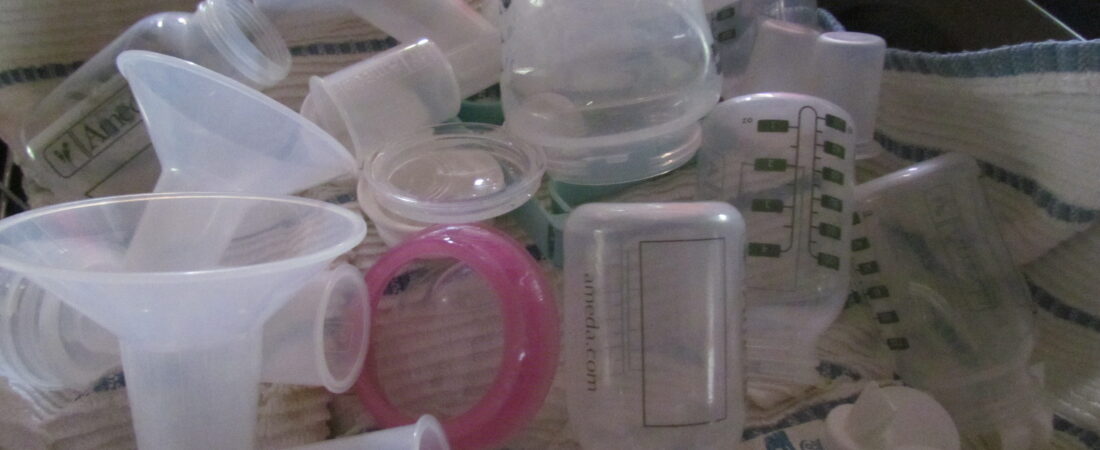
A wearable pump can look simple in product photos, but every session still creates parts that must be cleaned. CDC guidance on breast pump parts focuses on washing, sanitizing when needed, air drying, and keeping parts from being contaminated. For a workday, cleaning logistics can matter as much as suction settings.
Before buying, ask:
- How many parts touch milk?
- Can I buy spare parts easily?
- Can I clean or store parts safely between sessions at work?
- How long does assembly take?
- Do I need a cooler, storage bags, bottles, or extra valves?
Workplace rights affect pump choice
In the United States, the Department of Labor says covered employees are entitled to reasonable break time and a private place to pump that is not a bathroom for one year after a child’s birth. Office on Women’s Health gives similar guidance for breastfeeding and work accommodations.
This matters because a wearable pump should not be used to compensate for a workplace that refuses basic pumping accommodations. A discreet pump can make work easier, but you still need time, privacy, storage, and a routine that protects both comfort and milk handling.
What Reddit buyers keep asking
Recent parenting discussions around wearable pumps focus on a few practical issues: whether wearables work well enough, whether they should be secondary pumps, whether insurance covers certain models, how loud they are, how easy they are to clean, and whether they leak when moving around.
The useful consumer lesson is to ignore perfect product photos and plan around real workdays. A pump that is fine during a quiet morning at home may feel different in a shared office, a retail shift, a commute, or a job where breaks are unpredictable.
Buyer checklist
- Decide whether the wearable is your primary pump or backup pump.
- Check insurance coverage before paying out of pocket.
- Confirm flange sizes and insert availability.
- Read reviews for output, leakage, noise, and cleaning, not only comfort.
- Check replacement part cost and availability.
- Plan where you will pump, clean parts, and store milk at work.
- Avoid used single-user pumps unless the FDA guidance and device type clearly support safe sharing.
- Ask a lactation professional if supply, pain, latch, or medical issues are involved.
Bottom line
A wearable breast pump can be worth buying for work if it solves a real routine problem: mobility, privacy, backup pumping, or short sessions where a standard pump is hard to set up. It is less likely to be a good purchase if you expect it to be magic, ignore flange fit, underestimate cleaning, or need maximum output from every session and have no backup plan.
The best choice is the one that fits your body, schedule, workplace, milk storage routine, and budget. Reviews can narrow the list, but your use case should make the decision.
Related reading
- Wearable Breast Pump vs Electric Breast Pump
- Portable Breast Pump Buying Guide
- Breast Pump Buying Guides
- More Buying Guides
Sources
- Reddit r/NewParents: breastfeeding and pumping discussion
- Reddit r/NewParents: affordable breast pump discussion
- Reddit r/NewParents: wearable breast pump discussion
- FDA: choosing a breast pump
- FDA: buying and renting a breast pump
- CDC: breast pump hygiene
- U.S. Department of Labor: FLSA protections to pump at work
- Office on Women’s Health: breastfeeding and work law
- Cleveland Clinic: breast pump types
- Boston Medical Center: choosing a breast pump