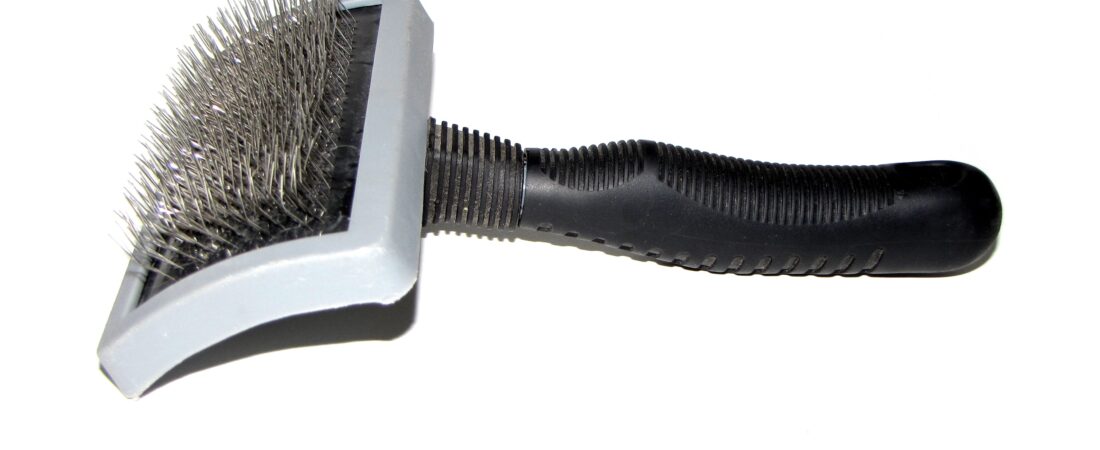
Short answer: for most double-coated dogs, the best brush is not one tool. A slicker brush helps loosen surface tangles and lifted hair, an undercoat rake reaches packed undercoat, and a deshedding tool can help during heavy shedding if you use it gently. The right choice depends on coat length, how much undercoat is packed in, and whether your dog tolerates brushing.
Public dog-grooming discussions show the same buyer confusion again and again: owners buy a popular deshedding tool, use it hard, then wonder why the coat looks thin or the dog hates brushing. Double-coated dogs need a calmer plan than “buy the sharpest-looking tool and keep pulling hair until it stops.”
First, confirm what kind of coat you are dealing with
Double-coated dogs have an outer coat and an undercoat. Common examples include huskies, golden retrievers, German shepherds, corgis, Australian shepherds, border collies, Samoyeds, and many mixed breeds. The undercoat can shed heavily, mat close to the skin, or compact into dense areas behind the ears, around the rear, under the chest, and along the legs.
VCA’s coat-care guidance emphasizes regular grooming and checking the coat and skin rather than treating brushing as only a cleanup chore. A tool that works on loose seasonal undercoat may be too much for sensitive skin, thin areas, or irritation.
| Tool | Best for | Be careful when |
|---|---|---|
| Slicker brush | Surface brushing, light tangles, lifted loose hair, finishing after raking. | The pins are sharp or you press too hard. |
| Undercoat rake | Thick undercoat, seasonal shedding, packed coat behind legs and around the rear. | The coat is matted close to skin or the dog is painful. |
| Deshedding tool | Loose coat during shedding season, short controlled sessions. | You keep scraping the same area or use it as a daily brush. |
| Metal comb | Checking whether tangles are truly gone. | The comb catches hard; forcing it can hurt. |
Slicker brush: the easiest starting point
A slicker brush is usually the safest first purchase because it works for surface grooming and helps you find problem areas. For a double-coated dog, use light pressure and short strokes. If your dog flinches, bites at the brush, or walks away, the brush may be too sharp, the pressure may be too hard, or the coat may already be tangled.
A slicker brush alone may not be enough during coat blow. You can make the top layer look neat while packed undercoat remains underneath. That is why many groomers finish with a comb.
Undercoat rake: better for packed seasonal shedding
An undercoat rake is useful when loose undercoat is trapped below the topcoat. It should move through the coat without ripping. If it catches immediately, stop and work smaller sections. For long-coated dogs, lift the coat in layers and brush from the skin outward, gently. For thick-coated breeds, work in short sessions rather than trying to finish the whole dog at once.
Undercoat rakes are especially useful around the rear, thighs, chest, and neck, where double-coated dogs often carry dense undercoat. They are less useful if the problem is surface dust, light daily shedding, or a dog that simply needs a quick tidy-up.
Deshedding tools: useful, but easy to overuse
Deshedding tools can remove a lot of loose coat quickly. That is why owners love them. It is also why they can cause trouble. The tool can keep pulling hair, and a beginner may mistake that for progress. Used too hard or too often, it can make the coat look uneven or irritate the skin.
Use a deshedding tool as a short-session tool, not a daily brush. Avoid bony areas, thin-coated spots, irritated skin, and wet or dirty coat. If you see redness, dandruff, broken hair, or your dog starts avoiding grooming, change tools or ask a professional groomer to show you the right pressure.
What Reddit grooming discussions keep showing
Recent public dog-grooming discussions tend to cluster around three buyer questions. First, owners want to know whether a slicker brush is enough for a husky, golden retriever, or shepherd. Second, they ask whether an undercoat rake is safer than a deshedding blade. Third, they worry about doing damage by brushing too much.
Those are useful questions because the right answer is usually not one brand. It is a sequence: loosen with the right brush, remove undercoat gently, check with a comb, and stop before the skin gets irritated.
A simple grooming routine for beginners
- Start with a dry coat. Brushing wet tangles can make things worse.
- Use a slicker brush lightly to find tangles and loose surface hair.
- Use an undercoat rake only where the coat is dense and packed.
- Use a metal comb to check behind ears, armpits, legs, chest, tail base, and rear.
- Keep sessions short if your dog gets impatient.
- Reward calm behavior instead of fighting through a long session.
- Book a groomer if the coat is matted, painful, or too dense to handle at home.
Do not shave a double coat just to reduce shedding
Many owners ask about shaving because shedding feels endless. For most double-coated dogs, shaving is not the first answer. The coat helps with protection, and regrowth can be uneven. Severe matting, heat risk, pain, or medical issues belong with a groomer or veterinarian.
Bottom line
If you are buying one tool today, start with a comfortable slicker brush and a metal comb. If your dog has a thick undercoat, add an undercoat rake. Use a deshedding tool only as a controlled shedding-season helper. The goal is not to remove every possible hair. The goal is a clean, comfortable coat and a dog that will let you brush again tomorrow.
Related reading
- Slicker Brush vs Deshedding Tool: Which Helps Dog Shedding?
- How to Choose Dog Clothes That Actually Fit
- Pet Food Reddit Reviews
- Buyer Voice Lab Blog
