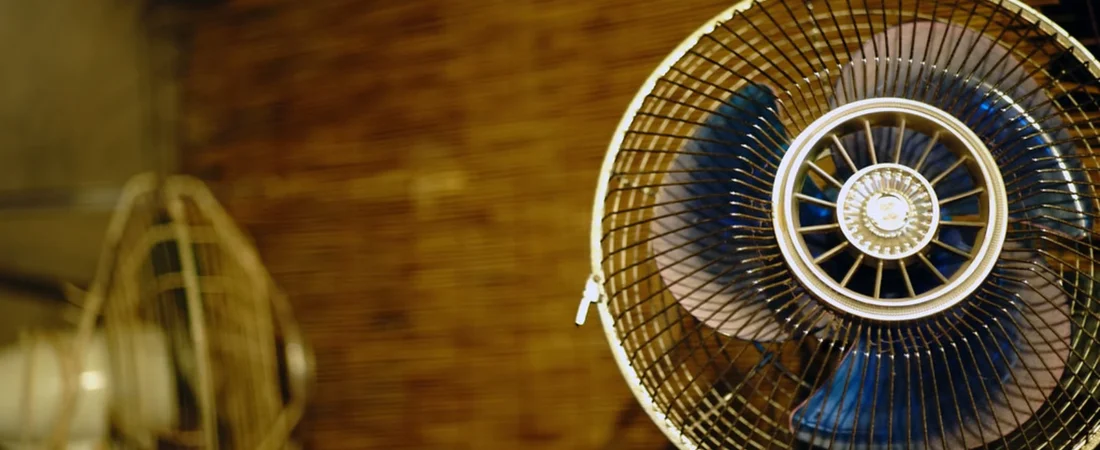
Some people say they need a fan to sleep when what they actually need is its steady sound. The airflow may be welcome in summer and uncomfortable in winter. A white noise machine separates the sound from the cooling, but digital loops and speaker tone may not feel like a real fan.
A public r/sleep discussion asked for a physical device that sounded like a fan, could mask bathroom noise through a wall, did not require an app, and could run through the night. Nearly all visible comments were available. Buyers compared real internal-fan sound machines, inexpensive box fans, digital alternatives, volume, small-room limits, and portability. The thread is useful because it reveals that “white noise” is not one sound.
Quick answer
Choose a fan when you want real airflow, a naturally changing mechanical sound, and a low purchase price. Choose a dedicated sound machine when you want fan-like sound without moving room air, easier travel, finer tone control, and predictable overnight operation in every season.
Use the lowest sound level that masks the disturbance. A louder machine is not automatically better, especially when it sits near the pillow for many hours.
| Decision point | Fan | White noise machine |
|---|---|---|
| Sound source | Real motor and moving air | Mechanical internal fan or digital speaker |
| Airflow | Yes | Usually no |
| Tone control | Speed may change pitch | Often adjustable tone, sound color, and volume |
| Loop risk | No digital loop | Depends on recording and playback design |
| Travel | Bulky for box fans | Many compact options |
| Cleaning | Dust collects on grille and blades | Speaker grille or internal fan still needs care |
| Price | Basic models can be inexpensive | Wide range from simple to app-connected |
| Power behavior | Simple switches may resume after an outage | Some models reset, remain off, or require an app |
Match the sound to the disturbance
Masking works when the steady background sound reduces the contrast between the room and an intermittent noise. A low rumble through a wall, a nearby bathroom door, voices, traffic, and sharp impact sounds occupy different frequency ranges. One white-noise setting will not cover every problem equally.
Before buying, listen in the room during the actual disturbance. Note whether the problem is:
- low-frequency bass or building vibration;
- speech through a wall;
- doors, plumbing, or footsteps;
- sudden street noise;
- a partner's devices or movement;
- an irregular appliance sound.
A sound machine may soften speech and small household noises while doing little against structural vibration. Ear protection, room changes, door seals, building maintenance, or a conversation with housemates may address the source more effectively.
A real fan has sound character that recordings may miss
Fan noise contains motor tone, blade movement, air turbulence, and small variations. People accustomed to that combination may notice when a digital file repeats or has an obvious high-frequency hiss.
There are two broad machine types:
- Mechanical sound machines use a small internal fan and adjustable vents to create sound without cooling the room significantly.
- Digital sound machines play recordings or generated noise through a speaker and may offer white, pink, brown, fan, rain, or other sounds.
Neither is automatically superior. Mechanical designs may sound more natural to fan users but have moving parts. Digital models offer more sounds and portability but depend on speaker quality and how the audio is generated.
Airflow can be a benefit or a problem
A fan changes the room. It can improve perceived comfort in warm weather, but it may feel drying, move dust, disturb papers, or cool one sleeper more than another. Positioning can reduce direct airflow while keeping the sound, but a large fan still occupies space.
A sound machine is easier in a cold season, shared room, hotel, or small bedroom where airflow is unwanted. It also creates a more consistent setup across locations.
Volume and placement
Place the device between the sleeper and the noise source when practical, rather than automatically beside the head. More distance from the pillow can reduce direct exposure while maintaining masking at the wall or doorway.
Start at a low setting and increase only enough to reduce the disturbance. Phone sound-meter apps are not laboratory instruments, but they can help compare positions and detect an unnecessarily loud setup. Anyone with hearing concerns, tinnitus, headaches, or sound sensitivity should seek appropriate professional advice rather than using escalating volume as the solution.
Avoid putting a fan where bedding blocks its intake or where it can tip. Follow clearance, cleaning, and electrical instructions.
Overnight reliability questions
The device must work for the whole sleep period without creating a new interruption. Check:
- whether sounds are seamless or visibly looped;
- maximum timer length and true continuous mode;
- button brightness and whether lights can be disabled;
- what happens after a power interruption;
- whether the model requires an account, Wi-Fi, or phone;
- whether volume changes accidentally through an app;
- motor or speaker noise at low settings;
- power adapter availability when traveling.
A simple physical switch can be more dependable than a feature-rich app when the goal is one sound every night.
Cost and maintenance
A basic fan may be the lowest-cost test. It also provides cooling that may already be needed. A dedicated machine earns its price through compact size, no airflow, tone control, and travel convenience.
Fans collect dust on blades and grilles, which can change sound and airflow. Mechanical sound machines also contain moving air paths. Digital speakers collect surface dust and may contain sealed batteries. Review cleaning instructions before purchase, especially when the housing is difficult to open.
Buying checklist
- Identify the noise source and frequency character.
- Decide whether airflow is wanted.
- Compare mechanical fan sound with digital playback.
- Listen for obvious loops at the intended setting.
- Check continuous operation, timer, and power recovery.
- Disable or cover lights only as allowed by the manual.
- Test volume and placement away from the pillow.
- Check room footprint and travel size.
- Review cleaning access and replacement power supply.
- Buy from a seller with a practical return policy because sound preference is personal.
Final recommendation
A fan is the practical first choice when airflow is useful and the familiar mechanical sound already works. A white noise machine is the better specialized purchase when the buyer wants fan-like masking in winter, in a small room, or while traveling. Sound character, placement, and low effective volume matter more than the longest feature list.
Related Buyer Voice Lab guides
Sources and research scope
- Public r/sleep discussion seeking a fan-like physical sound machine. Reddit displayed 50 comments; 48 visible comment elements were reviewed.
- World Health Organization: Making Listening Safe
- National Institute on Deafness and Other Communication Disorders: Noise-Induced Hearing Loss
This article is general product-selection information and does not diagnose or treat sleep or hearing conditions.
Featured image: “Electric fan” by haru__q, licensed under CC BY-SA 2.0. Original source. Cropped to 16:9.