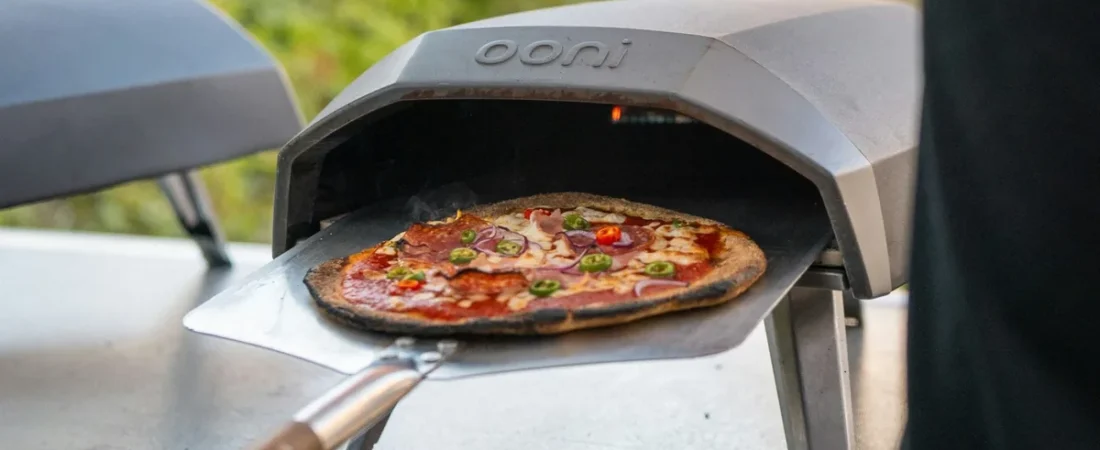
The first-generation Ooni Koda 16 can still be worth it in 2026 if you want a roomy, portable gas oven and do not mind learning its heat map. Its 16-inch chamber makes launching and turning easier, but the L-shaped burner also creates a hotter back-left area and a cooler zone near the front-right. Owners repeatedly described preheating the stone, reducing the flame after launch, and turning actively. That is enjoyable control for some cooks and unwanted work for others. Buy it for gas convenience, maneuvering space, and first-generation value. Compare Gozney or a newer/heavier oven if your priority is easier heat balance, faster recovery between pizzas, or lower-intervention party cooking.
Quick research note: We reviewed 830 usable comments from 39 deduplicated Reddit threads in eight communities. Thirty threads were from the most recent 12 months; nine older threads extended back to November 2022 for first-generation, long-term ownership, and generation-change evidence. The retained set includes contextual thread replies; 157 comments explicitly named Ooni or Koda 16. This is qualitative discussion research—not a controlled oven test or a representative survey.
The short answer
- Worth considering: buyers who want gas convenience, a 16-inch deck, useful turning room, and a movable outdoor oven.
- The learning curve: the first-generation L-shaped burner rewards active flame reduction, stone-temperature checks, and frequent turning.
- Best pizza fit: strong for cooks who enjoy high-heat Neapolitan-style pizza and are willing to manage the flame; workable but more demanding for repeated New York-style bakes.
- Main reasons to hesitate: uneven heat, stone recovery during multiple pizzas, igniter or staying-lit complaints, and a desire for more substantial build quality.
- Gozney is not automatically better: it can be easier to control and heavier-built, but usually costs more and may be heavier or offer different working space.
- Generation warning: this article is about Ooni Koda 16 — 1st Generation, not the Koda 2 Pro or every oven currently carrying the Koda name.
Which Ooni Koda 16 is this article about?
Ooni’s current U.S. Koda 16 product page, checked on August 29, 2026, labeled the product Koda 16 — 1st Generation. That distinction matters because search results and marketplace listings can mix the older L-burner oven with newer Koda designs.
The captured manufacturer page listed:
| First-generation Koda 16 field | Manufacturer-listed value at research cutoff |
|---|---|
| Oven type | 16-inch gas-powered outdoor pizza oven |
| Listed maximum temperature | 950°F / 500°C |
| Listed heat-up time | About 20 minutes to temperature |
| Listed Neapolitan-style cook time | As little as 60 seconds |
| Burner | L-shaped gas burner |
| Baking surface | Cordierite pizza stone |
| Product weight | 42 lb |
| Safety feature | Flame Safety Device listed to cut gas if the flame goes out |
| Direct-purchase warranty | Five years on Ooni.com, subject to current terms |
The page displayed $499 against $649 at the research cutoff. Price, inventory, fuel options, accessories, and warranty terms can change. The maximum temperature, heat-up time, and cook time are manufacturer claims under suitable conditions, not measurements reproduced by Buyer Voice Lab.
Use Ooni’s current Koda 16 setup guide, safety and legal manual, and warranty terms for fuel, clearances, ignition, cleaning, and troubleshooting.
Why the Koda 16 is still attractive in 2026
The first-generation Koda 16 remains understandable as a value purchase for three reasons.
1. Gas is convenient
There is no wood fire to build or maintain. For a weeknight cook, turning a control, preheating the stone, and focusing on dough and flame is simpler than managing solid fuel. Gas convenience does not make the oven hands-off, but it removes one variable.
2. The extra room is a control tool
The 16-inch label is not only about making the largest possible pizza. Owners repeatedly valued the space for launching, inserting a turning peel, and moving the pizza away from the hottest flame. One commenter who usually preferred Gozney said the Koda’s extra space could be more helpful to a learner than the smaller alternative’s build quality. See the source discussion.
Another owner upgrading from a Koda 12 described the extra room as a major benefit, while explicitly noting they had not personally used a Gozney. That limitation matters: useful testimony about deck space is not automatically a valid head-to-head product test. See the source discussion.
3. Long-term positive use exists
The extended source window included owners describing three years of weekly pizza nights and about four years with the older model. Those accounts are meaningful counter-evidence against treating the first generation as obsolete or inherently short-lived. They also included qualifications—an igniter failure in one case, and a persistent hot corner in another.
The real issue is heat control, not maximum temperature
The reviewed discussions rarely questioned whether the Koda 16 could get hot. The repeated question was whether the cook could keep the stone, flame-side crust, cool side, and pizza bottom moving toward doneness together.
Owners commonly described the back-left area as hotter and the front-right area as cooler. The L-shaped burner exposes two sides of the pizza to flame, but that does not make every part of an open chamber equally hot. A cook must learn where to launch, when to turn, and when to lower the flame.
One retained owner workflow was to preheat on full until the center stone reached the owner’s target, launch, then reduce the flame and avoid cooking on the highest setting. That is an anecdotal technique, not an operating instruction. Follow the official manual and never leave a lit gas oven unattended. See the source discussion.
The useful buying question is: do you want to learn an oven, or do you want the oven to smooth out more of the heat-management work? If you enjoy active control, the Koda’s heat map can become a repeatable skill. If you want a more forgiving bake with less turning and recovery management, a different burner geometry or heavier oven may be worth the premium.
Is the Koda 16 beginner-friendly?
It is beginner-friendly in space, but not fully beginner-proof in heat.
The wide deck gives a new cook more room to launch and turn. That is important because a cramped chamber magnifies a sticky launch or slow turn. At the same time, the first-generation heat gradient can punish hesitation near the flame.
A reasonable first-use plan is to learn one variable at a time:
- Verify safe outdoor setup and fuel configuration from the manual.
- Use a suitable infrared thermometer to understand the stone rather than relying only on air temperature or time.
- Start with a pizza smaller than the chamber limit so there is room to move it.
- Learn how the flame changes after launch without improvising around a safety device.
- Bake one pizza at a time before planning party throughput.
- Record dough weight, pizza size, stone temperature, flame changes, and result so the next bake is comparable.
This is process advice, not a universal recipe. Dough hydration, thickness, toppings, weather, fuel, and preferred style all change the outcome.
Neapolitan, New York, or several pizzas: style changes the verdict
Neapolitan-style pizza
The official product page emphasizes very high heat and a cook as short as 60 seconds. In the Reddit set, Neapolitan-style discussions centered on stone preheat, fast turning, and avoiding excessive flame-side char. The Koda’s responsiveness is useful, but the short bake leaves little time to recover from a slow launch or missed turn.
A direct Koda-versus-Solo Stove Pi comparison favored the Koda’s flexibility and 16-inch chamber, while the commenter preferred the Pi for strictly Neapolitan results. That is one experienced comparison, not a universal winner, but it shows why “best oven” depends on the pizza job. See the source discussion.
New York-style pizza
The first-generation Koda 16 can run at a lower flame, and one four-year owner described that as useful for New York-style pizza. The same owner still needed to turn because of the hot back-left corner. See the source discussion.
Another owner reached the opposite practical conclusion: after getting a home-oven baking steel, they stopped using the Koda because the open oven and uneven stone temperature made repeated New York-style bakes feel like too much adjustment. See the source discussion.
Both experiences can be true. The Koda gives you outdoor flame control and room; a home-oven steel gives you a more enclosed, familiar environment. Choose based on the pizza you actually make, not the oven’s maximum temperature.
Multiple pizzas and parties
The second, third, and fourth pizza reveal a different problem: stone recovery. Air and flame can look ready while the center stone has cooled after previous dough. In our reviewed set, stone, bottom texture, and recovery language appeared across many independent threads.
If entertaining is a primary use, compare ovens by repeat-bake pacing, not the fastest single-pizza claim. A heavier oven may retain and recover heat more predictably, but it will also be more expensive and less portable.
Common Ooni Koda 16 problems discussed by owners
These are recurring discussion themes inside the reviewed set, not measured failure rates.
| Discussion theme | What it means for a buyer |
|---|---|
| Hot back-left and cool front-right zones | Expect active turning and learn the stone’s temperature map |
| Flame-side burning before the bottom is ready | Balance stone preheat, launch position, flame level, pizza size, and turn timing |
| Stone recovery between pizzas | Allow the deck to recover and test real party pacing |
| Igniter failure | Confirm the warranty and official replacement/support route |
| Flame will not stay lit | Stop and use official troubleshooting; do not bypass the Flame Safety Device |
| Regulator, fuel, or conversion questions | Use only supported regional fuel configurations and instructions |
| Soot near the opening | Follow official cleaning and setup guidance; do not treat a forum comment as a safety standard |
One owner reported three years of weekly use before the igniter failed, then continued by lighting manually but was dissatisfied with support and parts availability. That is useful long-term evidence because it contains both affection for the oven and a repairability complaint. See the source discussion.
Another owner described a day-one staying-lit problem that was eventually resolved by a warranty replacement that worked correctly. See the source discussion.
Do not disable, bend, or bypass a flame-safety component because an online workaround appears successful. Gas equipment operating near 950°F is not an appropriate place to convert one person’s repair into general advice.
Ooni Koda 16 vs Gozney Arc: when does Gozney make more sense?
The retained discussions did not support “Gozney is always better.” They supported a more useful trade-off.
| Choose the first-generation Koda 16 when… | Consider Gozney Arc/Arc XL when… |
|---|---|
| Lower purchase price matters | Easier heat management justifies a higher price |
| You value a 42 lb movable oven | Heavier build and thermal mass are desirable |
| Extra chamber room helps your launches and turns | Stone recovery and repeat-bake pacing are higher priorities |
| You enjoy active flame and stone management | You want a burner pattern that some owners find easier to read |
| You want a flexible first-generation value option | Build feel, finish, and a more permanent outdoor setup matter |
Gozney comparisons repeatedly mentioned perceived build quality, single-side flame behavior, recovery, and ease. Counter-signals included higher cost, weight, and—in the case of a Roccbox—less working room. One comparison-oriented commenter summarized the first-generation Ooni as hard to beat for the price while describing Gozney as more compelling for build, ease, and gas use. The commenter still said both brands cooked pizza well. See the source discussion.
If the pain you are solving is merely “I want a new oven,” the upgrade case is weak. If the pain is specifically uneven heat, slow recovery, high-volume serving, or build quality, the more expensive alternative is easier to justify.
What about newer Ooni models?
The 2026 answer must account for generation change. A discounted first-generation Koda 16 competes not only with Gozney, but also with newer Ooni designs. The current page linked to the newer Koda 2 Pro at the research cutoff.
Do not assume a newer model is automatically the right value. Compare:
- actual purchase price after required accessories;
- chamber dimensions and usable turning room;
- burner geometry and low-flame control;
- product weight and storage plan;
- fuel compatibility in your region;
- included thermometer or temperature features;
- warranty and parts/support route;
- how many pizzas you expect to bake consecutively.
The first generation makes the most sense when its discount, portability, and space still outweigh the control advantages you expect from a newer or heavier oven.
A pre-purchase decision checklist
The first-generation Koda 16 is a rational buy if you can answer yes to most of these:
- I have a safe, stable outdoor location that follows the official clearances.
- I want gas convenience rather than wood-fire management.
- I value 16-inch working room even if my normal pizza is smaller.
- I am willing to use an infrared thermometer, reduce the flame, and turn actively.
- My primary style and party volume suit an open, relatively light oven.
- I have confirmed the exact first-generation SKU and supported fuel type.
- I know the current warranty and what happens if the igniter or flame system fails.
- I compared a newer Ooni, Gozney Arc/Arc XL, and a home-oven steel for my actual use.
- The price advantage remains meaningful after accessories, cover, table, peel, thermometer, and fuel setup.
- I accept that the advertised 16-inch capacity does not mean the largest pizza will be the easiest pizza.
If you mainly want even heat with less intervention or rapid recovery for a crowd, compare heavier and newer ovens before buying the first generation because it is on sale.
Verdict: is the Ooni Koda 16 worth it in 2026?
Yes, for the right cook. The first-generation Koda 16 remains a credible value choice when gas convenience, maneuvering room, portability, and price matter—and active heat management sounds like part of the craft rather than a defect in the experience.
It is less compelling for a buyer who wants the oven to make heat balance easy, regularly serves several pizzas in succession, or prefers a substantial permanent appliance. In that case, the added cost and weight of a Gozney or a newer Ooni may buy exactly what the first-generation Koda lacks: more forgiving control and recovery.
The honest 2026 recommendation is not “Ooni beats Gozney” or the reverse. It is: buy the Koda 16 for space and value; pay more when ease, recovery, and build matter more.
Frequently asked questions
Is the Ooni Koda 16 easy for beginners?
The 16-inch chamber gives beginners useful room to launch and turn, but the first-generation L-shaped burner still has a learning curve. Start with smaller pizzas, learn the stone temperature map, and expect to adjust the flame and turn actively.
Does the Ooni Koda 16 heat evenly?
Owners in the reviewed set repeatedly described a hotter back-left area and a cooler front-right area. Results depend on preheat, launch position, flame setting, pizza size, turn timing, and weather. The oven can cook well, but “even” should not be interpreted as hands-off.
Can the Ooni Koda 16 make New York-style pizza?
Yes, and some owners valued its low-flame control for that style. Others preferred a home-oven baking steel because repeated lower-temperature bakes required too much heat adjustment. Your preferred workflow and batch size matter more than the label.
Is the Ooni Koda 16 better than the Gozney Arc?
Not universally. The Koda is lighter, often cheaper, and roomy. Gozney may offer easier control, stronger perceived build, and better recovery in some owner comparisons, but it generally costs and weighs more. Match the oven to the problem you want to solve.
How many pizzas can I cook in a row?
The limiting factor is not only flame temperature; it is how quickly the stone recovers after each pizza. Dough size, style, weather, preheat, and pace all matter. If party throughput is important, test or compare repeat-bake recovery rather than relying on a 60-second single-pizza claim.
What should I do if the Ooni Koda 16 will not stay lit?
Turn it off and follow Ooni’s official setup, troubleshooting, and support process. Verify the supported fuel configuration and regulator. Do not bypass the Flame Safety Device or copy an unverified gas-system modification from a forum.
Is the first-generation Koda 16 obsolete?
No. Long-term positive ownership and useful value remain in the source set. It is an older design with a known L-burner heat pattern, so compare its discounted price and portability with the control and recovery of newer models.
Sources and methodology
- Ooni Koda 16 — 1st Generation official product page
- Official Koda 16 setup guide
- Official Koda 16 safety and legal manual
- Official Ooni warranty terms
- Selected Reddit evidence is linked in context above; the complete retained source list, query log, coverage gaps, and comment audit are preserved in the local research package.
- Research cutoff: August 29, 2026. Price, inventory, fuel options, warranty, and model availability should be rechecked immediately before publication.
Buyer Voice Lab searched exact-product, review, flame, stone, burner, fuel, problem, long-term, and comparison language across Reddit relevance, recent, comment-focused, and all-time views. We deduplicated by post and comment identifiers and reviewed 830 usable comments from 39 threads across eight communities: r/Pizza, r/neapolitanpizza, r/ooni, r/pizzaoven, r/Costco, r/uuni, r/OutdoorKitchens, and r/foodtrucks. The reviewed set includes contextual replies inside retained threads; 157 comments explicitly named Ooni or Koda 16. Twelve rendered thread trees were incomplete by displayed-count comparison, with a combined shortfall of 30 comments. The source set is qualitative and cannot establish population-level preferences, failure rates, or product quality.